
Water Softener Leak Emergency: When to Shut It Off and When to Call for Help
It is 9pm, there is water on your basement floor, and it seems to be coming from the softener. A water softener leak emergency feels worse than it usually is, but you still need to act in the right order. The good news: almost every softener leak can be stopped in under five minutes with two valves, no tools, and no plumbing knowledge. This guide walks you through exactly what to do, step by step, and then tells you how to figure out whether this can wait until morning.
If you just moved to Minneapolis from a soft-water state, you may be learning your softener the hard way tonight. That is normal. Most of the metro runs hard water, so nearly every house here has a softener, and every softener eventually leaks somewhere. Follow the steps below and you will have the water stopped before it does real damage.
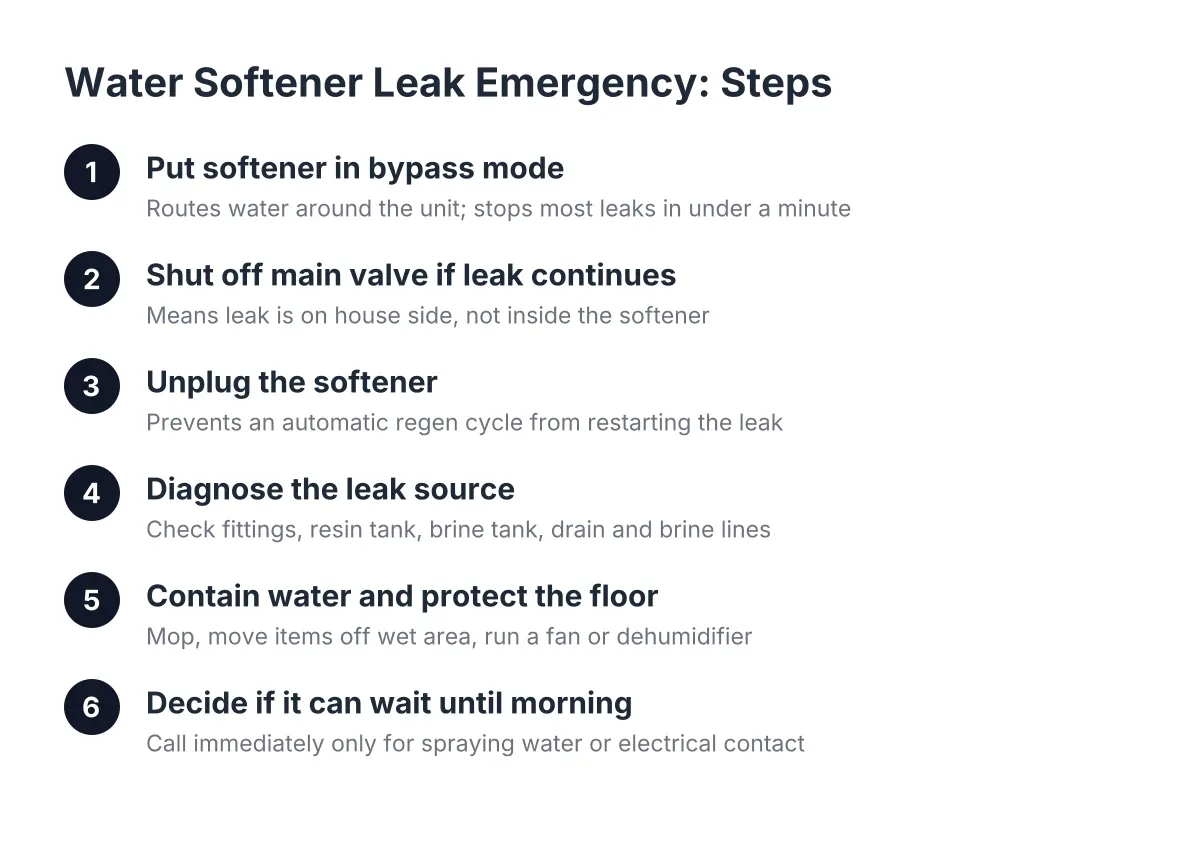
Step 1: Put the Softener in Bypass Mode
First, find the bypass valve. It sits on or near the control head, the plastic unit on top of the tall tank. Depending on the brand, it is a single lever you slide, a knob you turn, or two separate valves you rotate a quarter turn. Many are labeled "bypass" or marked with arrows.
Move it to the bypass position. This routes water around the softener entirely. Your house still has running water; it just skips the softener. According to InspectAPedia, softeners typically have dedicated inlet and outlet valves separate from the main house shutoff, which is exactly why you can isolate the unit without cutting water to the whole house.
If the leak slows and stops within a minute or two, you have confirmed two things. The leak is coming from the softener, and the emergency is over. The pressure feeding the leak is gone.
Step 2: Shut Off the Main Water Valve if Bypass Does Not Stop It
However, if water keeps flowing after you bypass the unit, the leak is on the house side of the plumbing, not inside the softener itself. It could be a supply line fitting, a loose connection at the bypass body, or a pipe joint near the unit. In that case, go to your main shutoff.
In most Minneapolis homes, the main valve is in the basement where the water line enters, usually near the water meter on the street-facing wall. Turn it clockwise until it stops, or a quarter turn if it is a lever handle. This kills water to the whole house, so treat it as the backup move, not the first move.
In addition, if you have an electric water heater and the water will stay off for a while, switch off its breaker. A water heater that runs without a full tank can damage its heating elements.
Step 3: Unplug the Softener
Next, unplug the control head from the wall outlet. A softener on a timer or metered schedule will try to regenerate on its own, and a regeneration cycle pushes water through the valve and down the drain line. If the leak involves the valve, a drain fitting, or the brine line, an automatic cycle can restart the leak while you sleep.
One caution worth knowing: some softeners can push water even after they are unplugged if a valve is stuck mid-cycle and the unit is not bypassed. That is why bypass comes first and unplugging comes second. Power off alone does not stop water.
Step 4: Diagnosing a Water Softener Leak Emergency
Water travels along floors and pipes, so the puddle by the softener does not always start at the softener. Before you decide this is a water softener leak emergency and not a general plumbing problem, spend five minutes confirming the source.
Dry the floor with a towel, then check these spots with a flashlight:
- Fittings where the supply lines meet the bypass valve, the most common drip point
- The base of the resin tank, the tall narrow tank; a crack here means replacement, not repair
- The brine tank, the short wide tank that holds salt; look for cracks or water above the normal brine level
- The drain line, usually a small flexible tube running to a floor drain or standpipe; check both ends
- The brine line, the small tube connecting the two tanks
- Nearby suspects that get blamed on the softener: the water heater drain valve, the floor drain backing up, and condensation on cold pipes in summer
The bypass test is your best diagnostic. If bypassing stopped the water, it is the softener. If it did not, it is the plumbing around it, and that is a different repair.
Step 5: Contain the Water and Protect the Floor
As a result of even a modest leak, basement water can wick into drywall, carpet tack strips, and cardboard storage boxes within hours. Once the water is stopped, deal with what already escaped.
Mop or wet-vac standing water. Move boxes and anything wood off the wet area. Run a fan pointed at the damp spot overnight; a dehumidifier helps if you have one. Minneapolis basements are cool and slow to dry, and mold does not care that the leak was small.
Also check whether the water reached anything electrical, including the softener's own outlet. If the outlet or cord got wet, leave the unit unplugged until it is inspected.
Step 6: Decide if This Can Wait Until Morning
Here is the honest answer to the 9pm question. Once the softener is in bypass and unplugged, almost every softener leak can wait until morning. The unit is isolated, your house still has water, and nothing is under pressure. You will have hard water at the taps for a day or two, which causes no harm beyond some spotting on dishes.
Call that night, or shut off the main and leave it off, only in these situations:
- Bypassing the softener did not stop the water, meaning a supply pipe or fitting is leaking under house pressure
- Water is spraying rather than dripping, or the puddle is spreading faster than you can contain it
- The water reached your electrical panel, outlets, or the furnace area
- Your floor drain is backing up and the water keeps rising
Everything else, including a cracked brine tank, a drippy rotor seal, or softener overflowing from the salt tank, is a next-day service call. Suppose a homeowner in Linden Hills finds an inch of water around the softener at 9pm on a Sunday. In that scenario, bypass stops the flow in two minutes, towels and a fan handle the puddle, and a Monday repair visit costs a normal service rate instead of an emergency one. That is the outcome these steps are built to deliver.
Step 7: What Your Technician Needs to Know About Your Water Softener Leak
Before you call for softener repair in the morning, write down a few details. They help the tech show up with the right parts and often turn two visits into one:
- Where the water appeared: top of the tank, base of the resin tank, brine tank, drain line, or floor fittings
- Whether bypass stopped it
- Whether the unit was mid-regeneration when you found it, which you can often tell from noise or the dial position
- The brand and model from the sticker on the control head, and the age if you know it
- How much salt is in the brine tank, and whether the water level in it looks higher than usual
Age matters for the repair-or-replace call. Worn seals and o-rings on a ten-year-old valve are a fair repair. A cracked resin tank on a fifteen-year-old unit usually points to softener replacement, because the tank is the most expensive part and the rest of the system is near the end of its life anyway. A good local tech will give you that answer straight instead of patching a unit that will leak again in six months.
Why Water Softener Leaks Hit Harder in Minneapolis
Hard water is the background cause of most of these failures. Across 49 measured Minnesota cities, the median hardness is 9.5 grains per gallon, and 61% of cities fall in the hard or very hard range, according to USGS Water Science School. Hard water means your softener regenerates often, and every cycle wears the seals, pistons, and o-rings inside the valve. Scale buildup inside the valve body speeds that wear up.
Salt adds its own problems. Softener salt contains insoluble material that settles at the bottom of the brine tank over time and needs periodic cleanout, according to Cargill. A crusted brine tank can cause overfilling, and an overfilled brine tank is one of the most common sources of water softener leaks that look like floods but are actually overflow.
Therefore, if your softener leaked once, put it on a maintenance schedule rather than waiting for the next puddle. An annual check of the seals, drain line, brine tank, and float assembly catches most of these failures before they reach the floor.
When to Fix It Yourself and When to Call a Pro
A hand-tight fitting you can snug with a quarter turn, a drain line that slipped out of the floor drain, or a brine tank that needs a cleanout are fair homeowner jobs. Replacing valve seals, servicing the resin tank, or repairing the bypass valve itself involves disassembling a pressurized unit, and a wrong reassembly turns a drip into a flood. If you are not sure which category your leak falls in, leave the unit in bypass and have a softener specialist look at it.
One more trade-off to know: a softener can sit in bypass for days or weeks without harm, but your house gets full-strength hard water the whole time. For a short wait that is fine. Leave it bypassed for months and you will see hard water stains return and scale start building in the water heater again, which is the problem the softener was installed to prevent.
Handled in the right order, a water softener leak emergency is a fifteen-minute problem at 9pm and a routine repair visit the next day. Bypass first, main shutoff if needed, unplug, confirm, contain, and take notes. That sequence protects your floor tonight and gets the actual fix done right tomorrow.
If you need water softener installation, Twin Cities Water Softening can help.
Prefer to talk it through? Call +16512171659 — a quick call is usually the fastest way to get a straight answer for your situation.