
Hard Water vs. Soft Water: Which Is Right for You?
If you own a home in Minneapolis, you are living with hard water or soft water, and the hard water vs soft water question comes down to what you are willing to pay for and what you are willing to put up with. Here is the short answer: hard water wins if you want zero upfront cost and zero equipment to maintain, and soft water wins if you want to protect your water heater, dishwasher, fixtures, and skin from the minerals our metro water carries. Hard water is what comes out of the tap in most Twin Cities homes, on both city and well supplies. Soft water is what you get after a water softener pulls the calcium and magnesium out. This guide walks through the real costs, the trade-offs, and which choice fits which home.
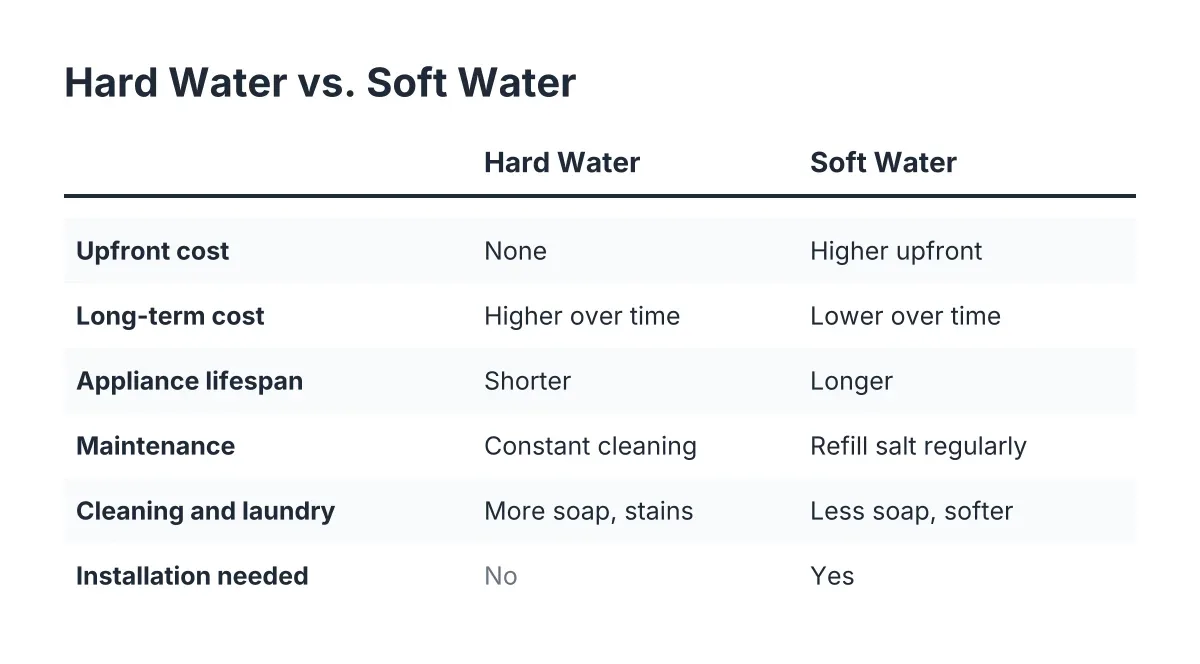
| Criteria | Hard Water | Soft Water |
|---|---|---|
| Upfront cost | None, it is your default supply | Higher upfront for softener purchase and installation |
| Long-term cost | Higher over time from scale damage, extra soap, and shorter appliance life | Lower over time, plus modest ongoing salt and service costs |
| Appliance lifespan | Shorter for water heaters and dishwashers due to scale buildup | Longer, since scale stops forming inside them |
| Maintenance | No equipment, but constant cleaning of stains and scale | Refill salt regularly, occasional service or repair |
| Cleaning and laundry | More soap, spotty dishes, stiff laundry, hard water stains | Less soap, cleaner rinse, softer laundry |
| Best for | Short-term stays, rentals you do not maintain, low-mineral supplies | Homeowners staying put, homes with staining or scale, well water with iron |
Hard Water: Strengths and Trade-offs
Hard water is water with a high load of dissolved minerals, mostly calcium and magnesium. Minneapolis and its suburbs sit on mineral-rich ground, so most municipal and well water here comes out of the tap hard. You did not choose it. It is simply the default.
The upside is honest and simple: hard water costs you nothing upfront. There is no tank in the basement, no salt to haul, and no system to service. The minerals themselves are not a health problem. Some people even prefer the taste of hard water for drinking. If you are renting, selling soon, or on one of the rare low-mineral supplies in the metro, doing nothing can be a fair call.
The downside shows up slowly and then all at once. Scale buildup coats the inside of your water heater, which makes it work harder and fail sooner. Dishwashers, showerheads, and faucets clog and crust over. You will see hard water stains on glassware, white film on fixtures, and in many suburbs, orange or brown iron staining in tubs and toilets. You use more soap and detergent, and laundry comes out stiff. None of these costs shows up as one bill. They show up as a water heater that dies years early and a Saturday spent scrubbing.
Soft Water Compared to Hard Water: Strengths and Trade-offs
Soft water is water after treatment. A water softener runs your supply through a resin tank that swaps the calcium and magnesium for sodium. The scale-forming minerals never reach your pipes, your water heater, or your skin.
The benefits are the mirror image of hard water's problems. Scale stops forming, so your water heater and dishwasher run efficiently and last longer. Soap lathers with less product. Glassware rinses clean, laundry comes out softer, and many people notice their skin and hair feel less dry, which matters through a Minnesota winter. If your well water carries iron or manganese, pairing a softener with the right iron filtration can stop the orange staining too.
The trade-offs are real but manageable. You pay for the equipment and water softener installation upfront. You refill the salt, typically once every month or two depending on household size and water hardness. Softened water carries a small amount of sodium, so some households add a separate drinking-water filter or keep one tap unsoftened. And like any appliance, a softener can eventually need attention, whether that is a resin tank service, a bypass valve fix, or a full water softener repair. If you want to understand what those fixes involve before you buy, our plain-English glossary of softener repair terms is a good place to start.
Comparing Hard and Soft Water: Key Deciding Factors
Cost drivers
Hard water is free today and expensive later; soft water flips that. With hard water, the costs hide inside other bills: extra soap and detergent, descaling products, higher water-heating costs as scale insulates the heating element, and appliances replaced early. With soft water, the costs are visible and predictable: the softener, the install, bags of salt, and the occasional service call. Most homeowners who plan to stay in their home come out ahead with soft water, because one early water heater replacement can erase years of salt savings. If repair costs are part of your math, our water softener repair cost guide breaks down what typically drives them.
Appliance lifespan
Soft water wins this category outright. Scale buildup is the main reason water heaters and dishwashers in hard-water homes fail early. Once a softener is installed, scale stops forming inside them, and existing buildup stops getting worse. Fixtures and showerheads stay clear too. Hard water offers nothing here; it is the problem this category measures.
Installation
Hard water requires nothing, and soft water requires a one-time professional install. A water softener installation means tying the unit into your main water line, adding a drain connection, and setting the system for your water hardness and household size. In most Minneapolis homes it is a single-day job. Sizing matters more than people expect: an undersized unit runs constantly and wears out fast, and an oversized one wastes salt. That is why we treat sizing and selection as its own step, not an afterthought.
Maintenance
This one is closer than it looks. Soft water asks for scheduled, easy maintenance: keep the salt tank filled and have the system checked now and then. Hard water asks for no equipment care but endless surface care, scrubbing stains, soaking showerheads in vinegar, and flushing the water heater to slow scale. Most homeowners find hauling a salt bag once a month easier than fighting stains every week. If you already own a softener and it has stopped keeping up, softener repair is usually cheaper than living with hard water again.
Situational fit
Choose based on how long you will live with the water, not just this year's budget. Hard water fits short timelines: a rental you do not maintain, a home you are selling within the year, or the uncommon metro supply that tests on the softer side. Soft water fits everything else, especially homes with visible scale or staining, well water with iron, a newer water heater you want to protect, or anyone tired of spotty dishes and dry skin.
Which Should You Choose?
Choose Hard Water if:
- You rent and the landlord handles appliances and fixtures.
- You plan to sell within a year and the home shows no staining problems.
- A water test shows your supply is on the low end of hardness, which is uncommon in the Twin Cities.
- Upfront cost is the only factor you can budget for right now.
Choose Soft Water if:
- You own your home and plan to stay for several years.
- You see white scale on fixtures, spots on dishes, or orange iron stains in tubs and toilets.
- Your water heater or dishwasher is newer and you want it to last.
- You are on suburban well water, where iron and manganese staining is common.
- Dry skin, dull hair, or stiff laundry bothers your household.
For most Minneapolis homeowners, soft water is the better long-term choice. Our metro water is hard enough that the damage is not a maybe; it is a schedule. The only question is whether you pay for it in equipment or in early appliance replacements.
Common Questions
Is hard water bad for my health?
No. The calcium and magnesium in hard water are the same minerals found in food, and drinking hard water is safe. The damage from hard water is to your plumbing, appliances, skin, and laundry, not your body. That is why this is a home-protection decision, not a health decision.
How do I know how hard my water is?
Get it tested. City water reports give a general number, but hardness varies across the metro, and well water can only be known by testing. A local water treatment company can test your supply and size a softener to match. When weighing hard water vs soft water for your specific house, that hardness number is the single most useful fact to have.
Does soft water taste salty?
In most homes, no. The softening process adds a small amount of sodium, far less than most people can taste. If your household watches sodium closely or you want the crispest drinking water, you can add a drinking-water filter or a whole-house filter alongside the softener, or leave one cold tap unsoftened.
Can I just treat the symptoms of hard water instead of installing a softener?
You can slow the damage, but you cannot stop it. Vinegar soaks, descaling products, and regular water heater flushes all help at the surface. The scale forming inside your pipes, water heater, and dishwasher keeps building either way. Symptom treatment makes sense for a short stay; a softener makes sense for a home you plan to keep.
If you need water softener installation, Twin Cities Water Softening can help.
Prefer to talk it through? Call +16512171659 — a quick call is usually the fastest way to get a straight answer for your situation.