
Water Softener Salt Bridge: How to Spot, Break, and Prevent One for Good
A water softener salt bridge is a hard crust that forms over the salt in your brine tank. The tank looks full, but underneath that crust sits a hollow pocket of air. Water can't reach the salt, no brine gets made, and your softener quietly stops softening. If your 15-year-old unit suddenly "stopped working" but the salt level never drops, this is the first thing to check. Here is a step-by-step guide to finding and fixing a salt bridge, breaking it safely, and setting up a simple maintenance routine so it doesn't come back.
This matters more in Minneapolis than in most places. The Twin Cities metro draws mineral-heavy water from the Mississippi River, with hardness levels of 15 or more grains per gallon for Minneapolis-area homes, according to HomeWater 101. At that hardness, a softener that sits idle for even a few weeks lets scale buildup start on your water heater, dishwasher, and fixtures. For a landlord with a tenant complaining about hard water stains on the shower door, a salt bridge is the cheapest possible explanation, so rule it out before you book a service call.
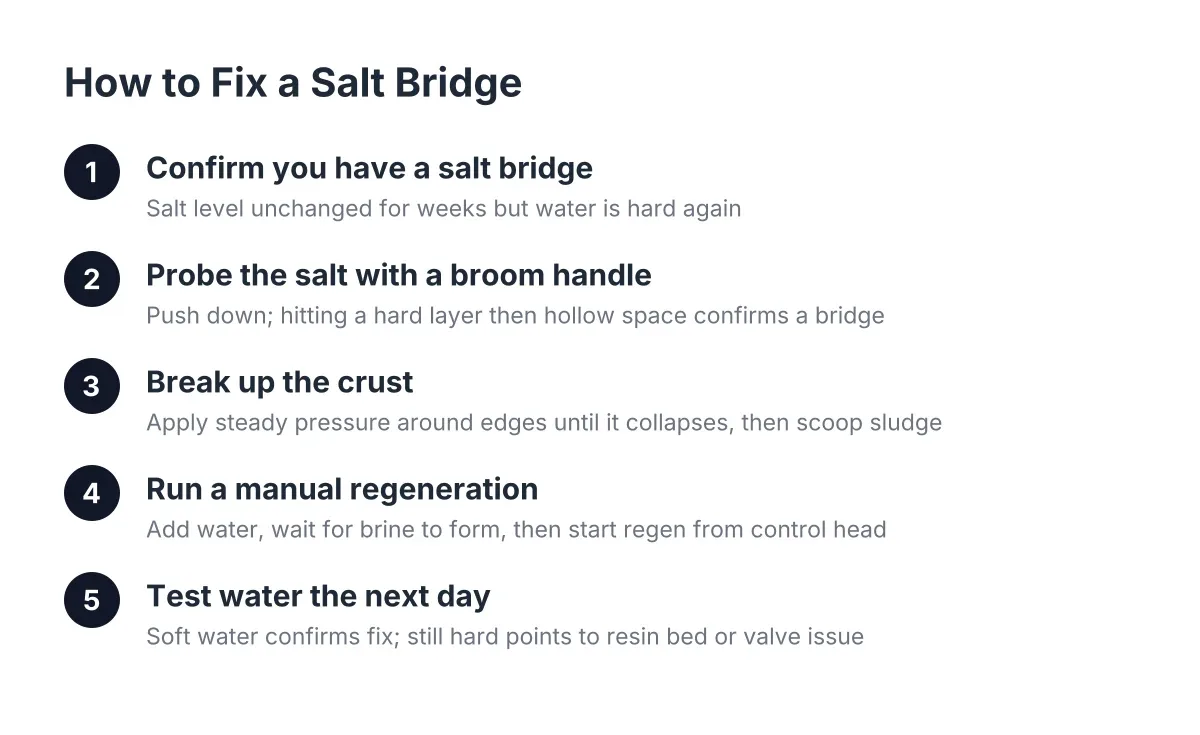
Step 1: Confirm You Actually Have a Salt Bridge
First, look for the telltale pattern. A salt bridge has one signature: the salt level in the brine tank has not moved in weeks, but your water feels hard again. Soap won't lather, glasses come out of the dishwasher spotted, and white scale shows up around faucets.
Other signs point the same direction:
- The tank looks full, but the softener has not asked for salt in two or three months
- Hard water stains are returning on fixtures and shower doors
- The brine tank holds standing water higher than usual
- The softener runs its regeneration cycle, but the water stays hard afterward
However, these symptoms overlap with other problems, like a fouled resin bed or a stuck valve. The next step tells you which one you're dealing with.
Step 2: Probe the Salt With a Broom Handle
Take a broom handle, a sturdy dowel, or a dedicated water softener salt bridge breaker tool if you have one. Open the brine tank lid and push the handle straight down into the salt.
If the salt is loose, the handle sinks easily all the way to the bottom of the tank. That means no bridge; your problem is elsewhere. If the handle hits a hard layer a few inches down and stops, then breaks through into empty space, you've found the bridge. That hollow pocket is why the softener ran out of usable salt while the tank still looked full.
Mark the outside of the tank at the height where you hit resistance. That tells you how thick the crust is and how much loose salt sits on top of it.
Step 3: How to Fix a Salt Bridge in Your Brine Tank
Work the handle around the edges of the crust and push down in several spots until the bridge collapses. Use steady pressure, not hammering. The brine tank is plastic, and the brine well (the vertical tube inside the tank) and the float assembly are easy to crack. A cracked brine well turns a free fix into a repair.
Never pour hot water on the bridge to melt it, and don't chip at the tank walls with a screwdriver or chisel. Gentle, repeated pressure from the top is all it takes. Most bridges break apart in five minutes.
Once the crust collapses, break the larger chunks into pieces small enough to dissolve. Scoop out any mushy, compacted salt sitting at the bottom; that sludge layer is often what seeded the bridge in the first place. Salt contains insoluble material that settles at the bottom of the brine tank over time and needs periodic cleanout, according to Cargill.
Step 4: Run a Manual Regeneration
After the salt is loose again, the softener needs fresh brine before it can soften water. Add a few gallons of water to the tank if it looks dry, wait a couple of hours for brine to form, then start a manual regeneration from the control head. On most units that's a "regenerate now" button or a dial you turn to the regen position.
Test your water the next day. If it's soft again, the bridge was your whole problem. If it's still hard after a successful regeneration with loose salt and good brine, the issue is likely the resin bed or the valve, and that's the point to bring in a softener repair pro rather than keep guessing.
What Causes a Water Softener Salt Bridge in the First Place
A water softener salt bridge forms when humidity, the wrong salt, or an overfilled tank lets salt crystals fuse into a solid crust above the water line. Minneapolis basements are a perfect setup: humid summers, temperature swings, and brine tanks tucked into damp utility corners. To fix salt bridge buildup and prevent it from returning, address the root cause.
The main culprits:
- Humidity. Moisture in the air condenses on the salt, partially dissolves the surface, and recrystallizes it into a crust. A damp basement utility room accelerates this.
- Overfilling the tank. Packing the tank to the brim lets salt clump together above the water line, where it never dissolves and bonds into a bridge.
- Low-quality salt. Rock salt and bargain crystal salt carry more insoluble material, which builds sludge and gives bridges a foundation.
- Low water usage. A softener in a vacant rental unit between tenants barely regenerates, so the same salt sits undisturbed for months and fuses.
That last one matters for landlords. Suppose you own a duplex in South Minneapolis that sat empty through a two-month turnover. The softener barely ran, the basement stayed humid all summer, and the half-full tank crusted over. The new tenant moves in, complains about spotty dishes within a week, and you're staring down a service call. A two-minute broom-handle check during the turnover walk-through would have caught it.
How to Prevent Salt Bridges Going Forward
Prevention is a habit, not a project. Build these four checks into your routine and you will likely never break up another bridge.
Fill the Tank Half to Two-Thirds, Not to the Top
Keep the salt level between one-half and two-thirds full, and let it drop to about one-third before refilling. A tank that's never packed full has far less dry salt sitting above the water line where bridges form. Typical households refill salt every two to four months on average, according to Culligan, though a family of four on 15-plus grain Minneapolis water will land on the shorter end of that range.
Use the Right Salt
Choose evaporated salt pellets over rock salt or crystals. Pellets are purer, dissolve more evenly, and leave less insoluble sludge at the bottom of the tank. Potassium chloride is an option too; many softeners let you switch the salt type setting between sodium chloride and potassium chloride, according to NSF International. Potassium costs more per bag, but it cuts the sodium your softener sends down the drain, which matters in Minnesota, where 75 percent of residents rely on groundwater vulnerable to chloride contamination, according to the Minnesota Pollution Control Agency.
Do the Monthly Broom-Handle Check
Once a month, when you glance at the salt level, push a broom handle down through the salt. It takes thirty seconds. If it sinks freely, you're done. Fold this into your regular water softener maintenance routine along with watching whether the salt level actually drops between checks; a level that never moves is your earliest warning sign.
Clean Out the Brine Tank Every Year or Two
Every year or two, run the salt down low, scoop out the sludge, and rinse the tank. In addition, that annual look is a good time for a broader inspection of the valve, float, and settings, or for a professional water softener maintenance service visit if you'd rather not do it yourself. Routine checkups catch worn parts and wrong programming, especially after household changes like a new tenant or a finished basement bathroom that raised water usage.
When a Salt Bridge Is a Sign of a Bigger Decision
Here is the honest trade-off for anyone with an aging unit. Breaking a bridge is free and takes ten minutes. But if your softener is 15-plus years old and bridges keep forming alongside other symptoms, like hard water returning between regenerations or the unit flushing constantly, the bridge may just be the loudest symptom of a system at the end of its life.
Old timer-based softeners regenerate on a fixed schedule whether you used water or not, which wastes salt and lets salt sit and fuse during low-use stretches. Modern metered, high-efficiency softeners regenerate based on actual water use and can be programmed to use less salt, water, and energy than standard units, according to Culligan. Minnesota has pushed hard in this direction; a rebate and optimization program in Marshall cut salt use by up to 320,000 pounds per year, with some households reducing salt use by as much as 86 percent, according to the Minnesota Pollution Control Agency.
Therefore, run a simple test on your own situation. If the softener is under ten years old and the bridge was a one-time event from overfilling or a humid summer, break it up and move on. If it's past 15, eats salt unpredictably, and you're already weighing repair quotes, a properly sized softener replacement in 2026 usually beats paying for repeated service calls on a unit that wastes salt by design. A local water treatment specialist can test your actual hardness and size the new system to your household or rental, so you're not oversold capacity you don't need.
Either way, the broom handle stays in the routine. A water softener salt bridge is one of the few softener problems you can find, fix, and prevent yourself, and catching it early keeps hard water from ever reaching your water heater and fixtures in the first place.
If you need water softener installation, Twin Cities Water Softening can help.
Prefer to talk it through? Call +16512171659 — a quick call is usually the fastest way to get a straight answer for your situation.