
Water Softener Resin Replacement — Complete Guide
Hard water is a fact of life in Minneapolis, and the resin beads inside your softener do all the heavy lifting against it. When those beads wear out, your softener keeps running salt through its cycles while scale and stains creep back into your home. This guide covers water softener resin replacement from end to end: how resin fails, when new beads solve the problem, when a tank or full system replacement is the smarter investment, and what drives the cost. By the end, you'll know which repair your failing softener actually needs before you spend a dollar on the wrong fix.
What You'll Find in This Guide
Why Softener Resin Wears Out in Minnesota Water
Your water softener works through ion exchange. Thousands of tiny resin beads inside the tank grab calcium and magnesium ions and swap them for sodium ions. During regeneration, a salt brine rinse flushes the hardness minerals away and recharges the beads for another round. In practice, those beads can only survive so many cycles before they break down.
Minnesota water makes that job harder than average. According to the USGS Water Quality Portal, the statewide average hardness sits at 278.3 PPM, which falls in the "very hard" category. Across 49 measured Minnesota cities, the USGS Water Science School data shows a median of 162.0 mg/L (9.5 gpg), with 61% of cities landing in the hard or very hard bands. As a result, softeners here regenerate more often than they would in softer-water regions, and the resin ages faster.
Beyond ordinary wear, two local factors accelerate the decline. First, chlorine in municipal water attacks the resin's structure and makes the beads soft and mushy over time. Second, iron and manganese, common in suburban well water around the Twin Cities, coat the beads and foul them so they can no longer exchange ions effectively. Either way, the result is the same: your softener runs its cycles, burns through salt, and still sends hard water to your fixtures.
Signs Your Resin Beads Are Failing
Watch for a few telltale symptoms. Scale spots return on dishes and shower glass even though the salt tank is full. Soap stops lathering the way it used to. Salt consumption climbs without any change in your water use. In more advanced failures, you may find orange or amber beads in faucet aerators or toilet tanks, which means the resin is physically breaking apart and escaping the tank. That last symptom often points to a cracked distributor tube or riser, terms you can look up in the plain-English resin replacement glossary if a quote mentions them. Once beads start escaping, waiting rarely pays off, because loose resin can migrate into plumbing and appliances and cause bigger repair bills down the line.
Choosing Your Water Softener Resin Replacement Solution
This is the decision that matters most for your budget. A failing softener does not automatically mean a failed softener, and water softener resin replacement often restores full performance for a fraction of what a new system costs. However, pouring fresh beads into the wrong situation wastes money. With this in mind, walk through the fix options from smallest to largest before calling anyone for a quote.
Fresh resin beads make sense when the control valve works properly, the tank itself is sound, and the system is reasonably matched to your household's water use. In that case, a technician removes the old media, inspects the riser tube and distributor basket, loads new resin, and runs a regeneration cycle to put the system back in service. For a mid-life softener with chlorine-degraded or iron-fouled beads, this is usually the right call, and it is often the fastest way back to soft water.
A water softener tank replacement comes into play when the vessel itself has failed. For example, a tank leaking from the top often means the threads or the upper seal area have cracked, and no amount of new media fixes a compromised pressure vessel. Similarly, a bulging or visibly damaged tank needs a replacement tank, not a patch. Sometimes the tank swap and new resin happen together, since an open tank is the cheapest moment to refresh the media and avoid paying for labor twice.
When Full Replacement Beats Repair
That said, some softeners are not worth saving. If the control valve is obsolete, parts are hard to source, or the system was undersized for your household from day one, a full system replacement is often the smarter investment. Older timer-based units are a common example, because they regenerate on a clock instead of actual water use and waste both salt and water. Minnesota has taken this seriously at the policy level. A Marshall, Minnesota program documented by the Minnesota Pollution Control Agency offered $500 to $700 rebates for replacing timer-based softeners as part of a chloride-reduction effort. The lesson for Minneapolis homeowners is simple: if your softener predates demand-initiated regeneration, put repair money toward an upgrade instead of chasing a short-term fix.
Factors Affecting Water Softener Resin Replacement Cost
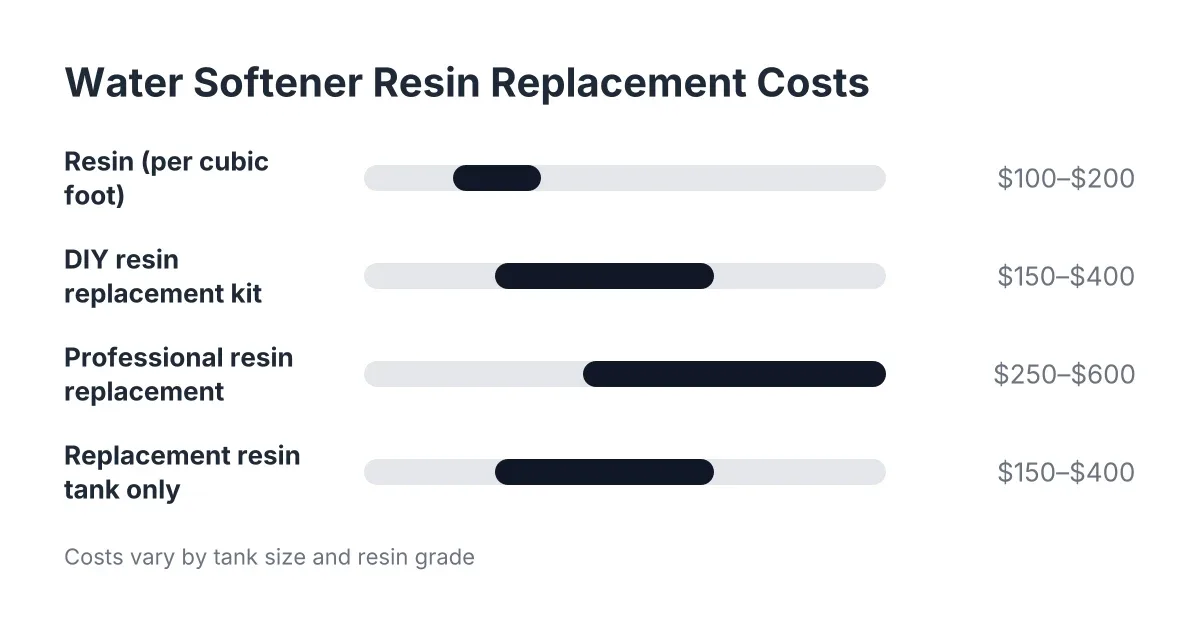
No two resin jobs price out the same, so it helps to understand the variables before you gather quotes. The biggest factor is tank size, measured in grain capacity. A larger softener holds more cubic feet of resin, and media is priced by volume, so a big family-sized system costs more to refill than a compact unit.
Resin type matters just as much. Standard 8% crosslink resin handles typical municipal water well. However, homes on chlorinated city water often benefit from 10% crosslink resin, which resists chlorine degradation and lasts longer. Suburban homes with iron in their well water may need fine mesh resin, which captures iron more effectively but costs more per cubic foot. If those terms are new to you, the resin replacement glossary defines each one so you can read a quote line by line instead of guessing at the jargon.
Labor and access round out the picture. A technician must disconnect the softener, remove the old media, inspect or replace the riser and distributor, load the new resin without damaging internal parts, and sanitize and regenerate the system. Additionally, related repairs discovered during the job, such as a worn bypass valve or a cracked brine line, add to the total. Old resin disposal is another small line item worth asking about, since not every provider includes it by default.
DIY Kits Versus Professional Service
A water softener resin replacement kit typically bundles the media, a funnel, and sometimes gravel underbedding and a new riser tube. For a handy homeowner with a straightforward system, a kit can work. In practice, though, the job is messier than it looks. Wet resin is heavy, spilled beads are slippery, and reassembling the valve incorrectly can send media into your home's plumbing. To put it simply, the kit saves money only if the job goes right the first time.
There is also a stewardship angle worth knowing. According to the Minnesota Pollution Control Agency, 75% of Minnesotans rely on groundwater for drinking water, and softener discharge contributes to chloride contamination. Fresh, correctly specified resin regenerates more efficiently and uses less salt, so a properly done job benefits your budget and the watershed at the same time. Homeowners who weigh both outcomes tend to end up happier with the result, whichever route they choose.
Frequently Asked Questions
How much does water softener resin replacement cost? Pricing depends on tank size, resin type, and labor needed to inspect or repair internal parts, so getting a quote based on your specific system is the only reliable way to know your number.
Can I replace resin myself? A straightforward system can work with a DIY kit, but misaligned risers or spilled media often turn a simple swap into a bigger repair, so weigh the savings against the risk before you start.
How do I know if I need a new tank instead of new resin? Check for cracks, leaks near the top fittings, or bulging walls; a sound tank with a working valve almost always just needs fresh media instead of a full replacement.
Ready to Get Started?
Twin Cities Water Softening handles water softener resin tank service, resin and tank replacement, repair, sizing, and full system installation for homeowners across Minneapolis and its suburbs. If your softener has stopped keeping scale and stains at bay, we can assess whether new resin, a replacement tank, or a new system is the right fix for your water. Call us or send a service request to get the conversation started.